Header start
- Home
- Admissions
- Undergraduate Admissions
- Admissions Procedures for the PEARL
-
PEARL Student Voices
PEARL Student Voices
Content start

Q1: Did you always dream of studying in Japan?
Actually, no. If someone had told me a few years ago that I would end up studying in Tokyo, I probably wouldn’t have believed them.
I was enrolled at a medical university in my home country when everything changed. COVID hit, and then the military coup happened. The university shut down. Right when the whole world seemed to come to a standstill, my life curiously started moving in a completely new direction.
At the time, I worked at a non-profit social enterprise as the General Manager of Marketing and PR. I organized education and study-abroad events, helping other students explore opportunities overseas.
Ironically, those events made me realize how much I wanted to study abroad, too, and how many doors it could open for me.
My family suggested various countries as possible destinations, but I wanted a place that felt safe, affordable, and full of potential. As I researched more, I discovered Tokyo’s flourishing startup ecosystem. I’ve always loved business and tech, and I co-founded a marketing agency back home, so the idea of building a future in Tokyo excited me.
People often say Japan is a difficult place for foreign startups. I agree in some ways, especially with visas and company registration. But I also see so many opportunities here—enough that I felt, “This is where I need to be.”
Since my Japanese wasn’t yet strong, I looked for English-taught programs. That’s how I found PEARL. I instantly felt it was the right decision.
Q2:How has campus life been treating you so far?
Arriving on campus felt like jumping in at the deep end. I’m not going to lie—it's been a bit stressful and overwhelming at times. Balancing school and my part-time job has been harder than I expected, and I even pulled some all-nighters during midterms. (I really don’t recommend that to anyone!)
Before coming here, I imagined joining multiple clubs and being super active. But reality quickly reminded me that there are only 24 hours in a day, and it’s hard to manage everything, between work and studies.
Nonetheless, this new life has been full of small, beautiful surprises.
The campus is breathtaking in autumn. The trees actually change the whole atmosphere. Professors are incredibly inspiring, and I love how many classes emphasize open discussions. Back home, I wasn’t used to that style of learning. Professors actually encourage participation, which motivates me a lot.
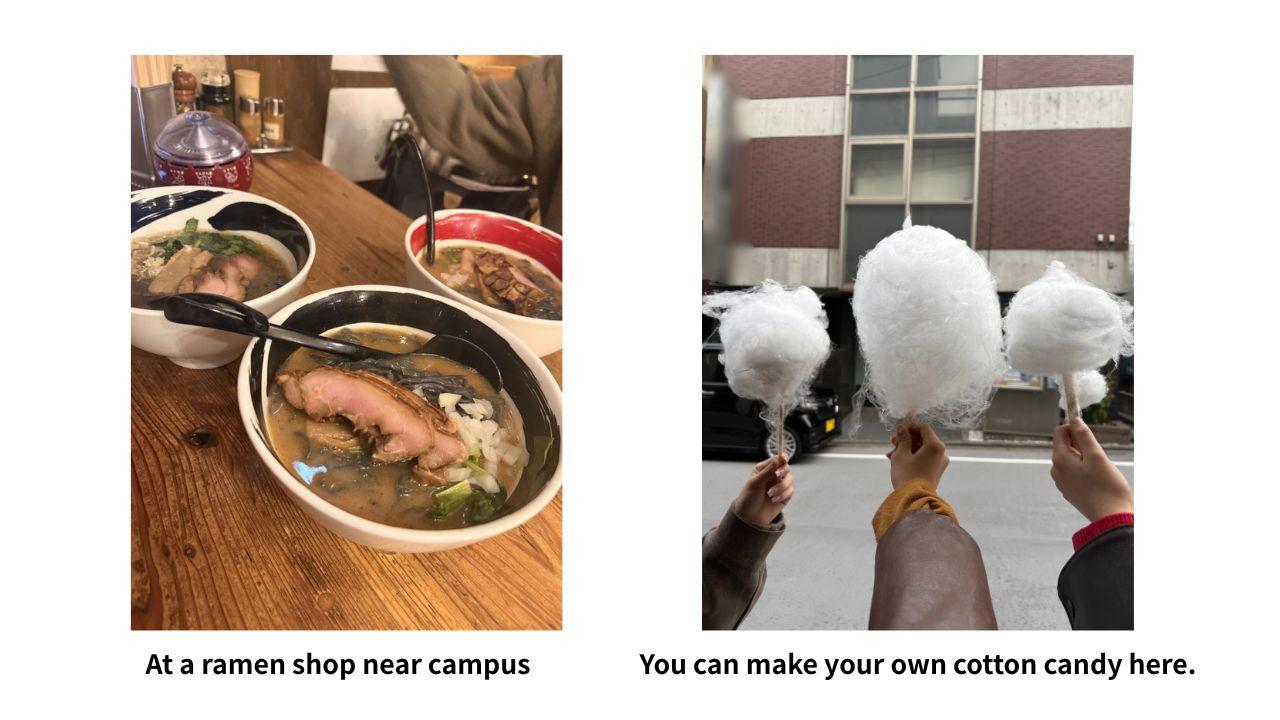
Another unexpectedly great part of life at Keio is the food. There are so many restaurants on and around campus that my friends and I jokingly made a goal to try every menu item over the next two years. It’s definitely impossible... but we’re still going to try anyway (laughs).
Q3: Have you made new friends from around the world?
Oh, yes! I’ve met friends from all over, especially from Asia. What’s more, I’ve also met a bunch of Burmese students here and made friends outside of PEARL, even some who are in master’s programs. One of my favorite memories so far has been going to the Keio vs. Waseda baseball match together with friends. It was my first baseball game, and I didn’t expect it to be so fun! I’m excited to hang out and share even more moments with my friends over the time to come.


Q4: Can you give a message for young people in your home country who want to study abroad despite political or social difficulties?
I know how hard it is. I truly do.
Many young people back home face challenges completely out of their control—political instability, limited opportunities, uncertainty about the future. I encountered the same.
But even in such situations, there are still steps you can take. There are still things within your control.
I try my best to share information through podcasts and webinars because I want to support students who feel lost, just as I once did.
My message to them is this:
Even if everything feels impossible, don’t give up.
Ask questions. Reach out to seniors. Attend webinars. Research early. Prepare your extracurriculars. Don’t be shy—your future is worth asking for help!
Personally, I don’t think I got into Keio because of academics alone. I believe my essay and other documents mattered a lot. And that’s something I love about Keio: Keio values the whole person, not just the grades.
I really hope everyone from my country continues pursuing their dreams of studying abroad, no matter how daunting the challenges may seem. And I’m here to help, however I can.
(This interview is from November 2025.)